I had to put new words in my mouth, I had to hit the pavement of these streets that were
completely foreign to me. During the day, when I would find myself alone, I would go out
walking to try to figure out where I was. I would walk in endless circles in order to avoid
getting lost. Although I was born in a bustling metropolis, nothing in Montreal could echo
what I had known. Even on the metro’s green line, which I regularly haunted on my journeys
of discovery, people looked past me. I was invisible.
A few years after my arrival, a New York magazine commissioned me to take a series of
photos to illustrate an article about Montreal. Over the course of the assignment, I discovered
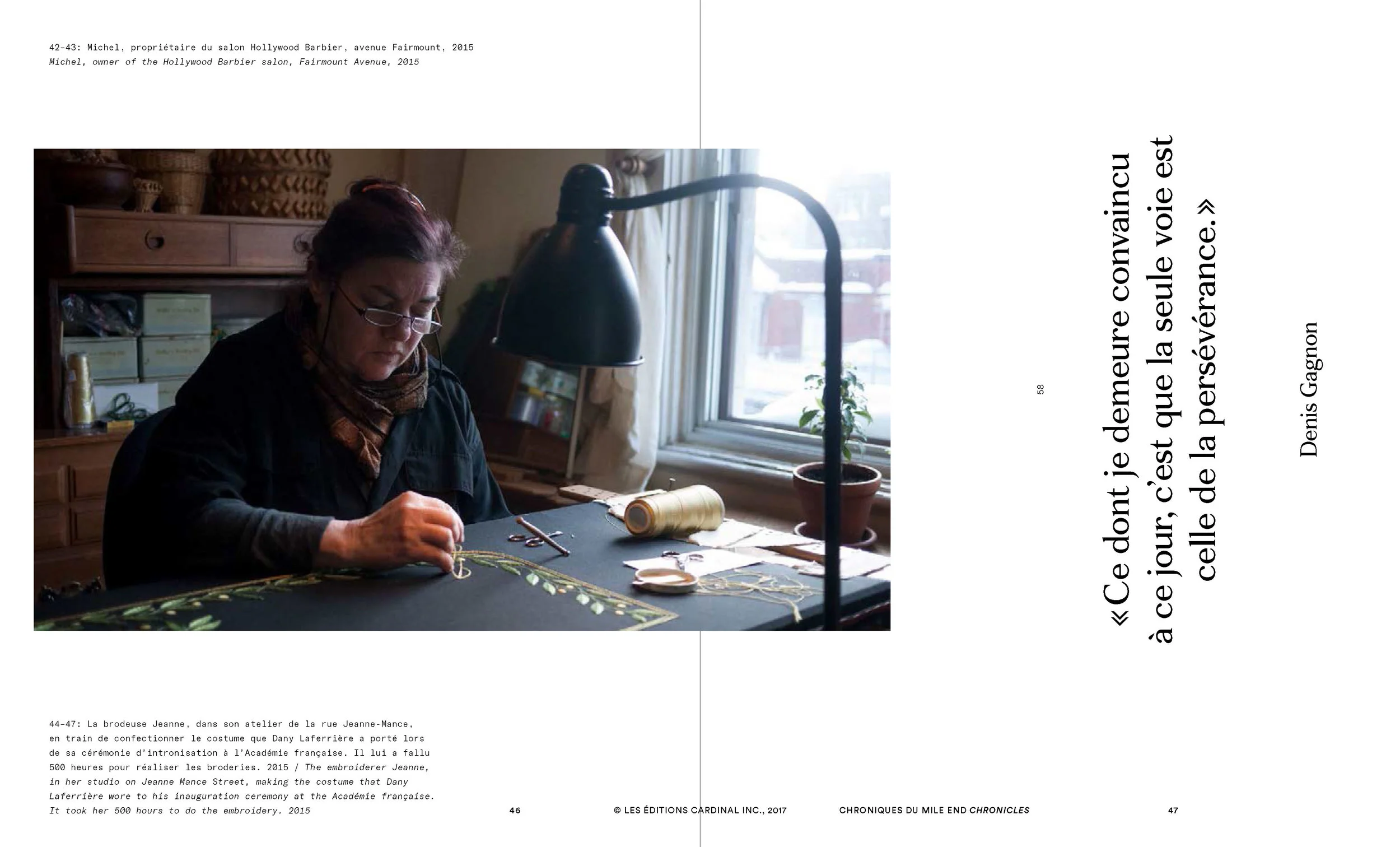
new faces, people I had never seen before, a “different” city. They were artists,
actors, artisans. They all had their studios in the same neighbourhood, an area that I’d
never come across throughout my carefully plotted meanderings.
From that moment on, my life changed. One morning, I decided to explore the area. For a
proper start of the day, I went for a coffee. I randomly stumbled upon a lively place. There
were about thirty people lined up along the counter, and most of the tables were occupied.
I found one in a corner that gave me an incomparable view of a scene I’ll never forget
and which I’ve since returned to see as often as possible. At a nearby table, people from
different cultural communities were talking. Arabs, Italians, Africans, and Quebeckers
came and went as if in a game of musical chairs. A real sense of community resonated in
this place. A mini São Paulo.
A few weeks went by before I returned to the same café and took my place in the long
line before finding a seat (I also took part in the game of musical chairs, after all). A
few notes from a 1990s song creeped into my ears. A man whistled and spoke loudly.
“A latte, Georges?” I looked up and saw the loud fellow standing behind the counter:
“A latte? It’s Georges, right?”. I nodded. It had been a long time since I’d last visited the café.
Silently, I wondered, “Does this guy really remember my name?”. Surprised but pleased,
I paid and sat in a corner with my computer. I asked someone sitting at the table next to
me the name of the barista. His name is Vince. He became the first human I spoke to in
the morning.
That’s how I discovered Café Olimpico, and it was through their door that I entered the
Mile End and, ultimately, the city. Even today, almost ten years later, I spend long days at
this café. I find acquaintances from all backgrounds there. Sometimes I think I see a forlorn
look in their eyes, like a sorrow I know so well. On Saturday mornings, I go there with
my son. I rediscovered my taste for the soccer games that I was a fan of and which I had
abandoned after leaving Brazil. Throughout the victory roars that we shout together and
the despair that makes us console one another, I rekindled with a sense of belonging and
with what I left behind a bit. I make friends. I am no longer alone or invisible.
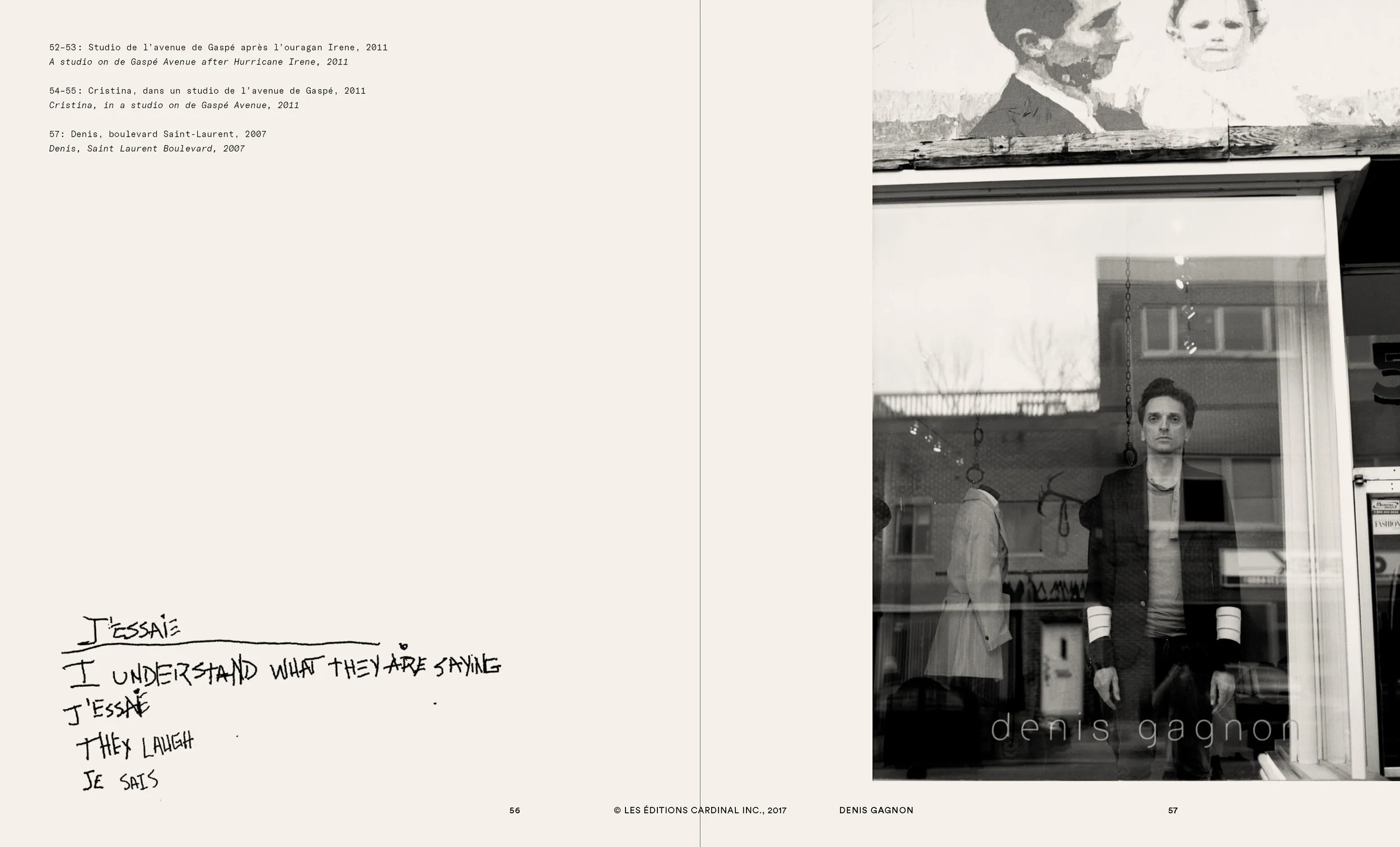
Ten years ago, I started taking pictures of the neighbourhood. I saw its businesses open up
and shut down, its children grow, its artists create, its inabitants grow old, cry, live in spite
of everything. That’s what this book is simply about.